Understanding how an estate freeze works

24 November 2026 by National Bank
img-estate-freeze

Planning your succession doesn’t mean stepping away from your business. Learn how an estate freeze can help you gradually transfer your family business, keep a degree of control, and prepare for retirement while setting the stage for a smooth transition.

An estate freeze is a succession and tax-planning strategy that allows business owners to "freeze" the current value of their ownership interest while transferring future growth to other shareholders, such as their children or a family trust. 

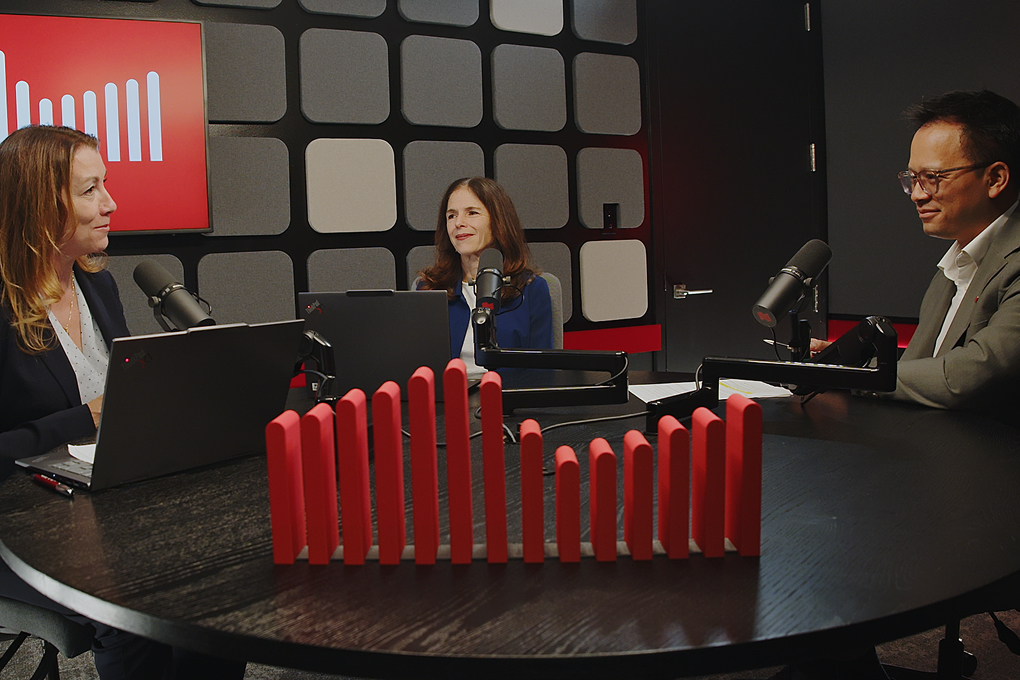
In this episode of Powerful Advice, host Nancy Paquet, Executive Vice President, Wealth Management, is joined by Susan Moore, Lead Expert, Wealth Management Solutions at National Bank Financial, and David Truong, President of National Bank Planning and Employees Benefits. 

Together, they go over an example of how an estate freeze could help business owners Liz and Michael prepare for retirement and plan the transfer of their family business. Their two adult children already work in the business, but the couple still needs to decide how ownership and future growth should be transferred. 

Watch the full episode to learn how an estate freeze works and understand some of the key planning considerations involved. 

How does an estate freeze work? 

An estate freeze can help facilitate the gradual transfer of a business to the next generation without necessarily transferring control of the business right away. Let's take a look at an example from the podcast. 

Liz and Michael's business is worth $5 million when they implement the estate freeze. Their existing ownership interest is frozen at $5 million. As their business grows, new shares can be issued to their children or a family trust, for example. In a few years, let's say the business is now worth $8 million. Depending on the structure put in place, the new shareholders can benefit from the $3 million growth following the freeze. 

To recap:

Before the freeze

  • Value of the business: $5 million
  • Liz and Michael own 100% of the shares

Growth of the business after the freeze

  • Value of the business: $8 million
  • Frozen value of Liz and Michael's shares: $5 million
  • Growth attributed to new shareholders: $3 million

Implementing an estate freeze doesn't mean Liz and Michael need to give up ownership of their business right away. Ownership, control, and future growth are separate considerations that should be considered when planning a transition. 

What are the main benefits of an estate freeze? 

An estate freeze can provide business owners with greater certainty as they plan for the future. As estate freeze can help you: 

  • Fix the current value of an owner's interest in the business. 
  • Transfer future growth to the next generation. 
  • Support business succession planning. 
  • Allow owners to retain control, depending on the structure. 
  • Provide greater certainty for retirement and tax planning. 

Can you maintain control of your business after an estate freeze? 

Yes. Business owners can maintain control after an estate freeze if the structure allows them to retain voting shares or other control rights. Transferring the future growth of the business doesn't mean giving up control right away. 

For example, business owners can retain voting shares to allow them to maintain control of the company. New shares can then be issued so that future growth will benefit these new shareholders.  

In Liz and Michael's case, they won't benefit from future growth in the value of their business, but they can maintain control through their voting shares. Transferring control can happen separately from transferring the value of the business, depending on the chosen structure.  

What role can a family trust play in an estate freeze? 

A family trust can hold the new shares issued as part of an estate freeze, allowing future growth in the business to accrue to the trust for the benefit of its beneficiaries. This can give a family more flexibility and time to prepare when planning how and when ownership will eventually be transferred. 

Greater flexibility 

  • Parents can begin planning the transfer of the business while postponing decisions about how ownership will be divided. Depending on the structure and allocation chosen, future growth in the business can benefit several family members. 

More time to prepare 

  • A trust makes it possible to wait before transferring the new shares to your children. This gives everyone time to consider their role in the business and allows family members to determine who wants to take over. 

It’s also important to remember not every family member working in a family business has aspirations to one day run it. As well, business owners should know that a family trust is not needed to implement an estate freeze. Whether one is appropriate depends on the circumstances of the business and the family. 

What are the potential tax implications of an estate freeze? 

An estate freeze does not eliminate tax, but it can support tax planning in two main ways: it can limit future growth in the capital gain attributable to the current owners, and, depending on the structure, it may allow certain tax consequences to be deferred. 

The tax implications will vary depending on the structure of the estate freeze and each person’s circumstances. 

How can an estate freeze limit future capital gains?

An estate freeze allows business owners to lock in the current value of their shares. Future growth in the business can then benefit the next generation, such as their children. 

Rather than eliminating tax implications, an estate freeze can help owners prepare for the business transfer by providing greater certainty about the value that may be subject to tax later. 

This strategy can have a significant impact on long-term tax planning. In Canada, certain property may be deemed to have been disposed of at fair market value at the time of death, which can result in tax consequences. Exceptions may apply, including in transfers to a spouse or common-law partner. 

Can an estate freeze defer capital gains tax?

Yes. An estate freeze can let you defer capital gains tax until the shares are disposed of later. This means it doesn’t necessarily result in an immediate tax bill. 

However, the tax implications vary depending on the structure chosen and your succession goals. It’s therefore recommended that you seek tax and legal advice before implementing an estate freeze. 

How can an estate freeze help with retirement planning? 

An estate freeze allows business owners to fix the value of their ownership interest, which can then be accessed gradually. 

This strategy can therefore help fund retirement while beginning the process of transferring the business. 

For Liz and Michael, the established $5 million value of their frozen ownership interest gives them a clearer picture of the funds that could be available for retirement, which may be accessed gradually depending on the structure put in place.   

When is an estate freeze the right move? 

An estate freeze may be worth considering for business owners whose company has grown significantly in value and who want to begin transferring future growth to the next generation while potentially retaining control of the business. 

Several factors should be considered to determine if an estate freeze is right for your family business, including: 

  • Family dynamics 
  • Business objectives 
  • Business structure 
  • Financial needs 
  • Successful plan 

Every business situation is unique. That's why it's vital to get personalized advice before implementing an estate freeze.

Why should you regularly review your plan after an estate freeze?

Planning doesn’t end once the estate freeze is in place. An estate freeze is part of a broader financial plan that should evolve over time. 

Several factors should be considered, including: 

  • Overall financial and tax planning 
  • RRSP and TFSA withdrawals 
  • Funds withdrawn from the business 
  • Government retirement benefits 
  • Insurance 
  • Your will 
  • Power of attorney 
  • Shareholders’ agreement 

An estate freeze establishes a structure that can help facilitate the transition of the business, while a financial plan integrates that transition into your broader retirement goals. The plan should be reviewed whenever your family situation, goals, or circumstances change. 

An estate freeze can be an effective strategy in certain situations, but it should be part of a comprehensive financial plan. Before moving forward, speak with qualified professionals who can help you determine whether this strategy is appropriate for your situation and goals.

Plan your retirement with the right advice

Plan your business transfer with the right advice

0:08 

Building wealth is one thing, but turning years of hard work into lasting legacy is another. 


0:15 

But what does it really take to do that? 


0:18 

Welcome to another episode of Powerful Advice. Here we don't just talk about money. We talk about people, their goals, and the choices they have to make along the way. Because behind every financial decision, there's usually a bigger question. What kind of future are we trying to build? 


0:39 

Today we will share the story of Liz and Michael. They have a story many successful business owners may relate to. 


0:47 

They worked hard, built wealth, and now they want to make sure it supports their retirement and their family's future. You'll see that our experts went the full mile with their financial plan. 


1:01 

I'm your host, Nancy Paquet, Executive Vice President, Wealth Management at National Bank of Canada. And today I have the privilege of being joined by colleagues. Susan Moore, Susan, you're lead expert, wealth management solutions at National Bank Financial. Thank you for being here. Thank you, Nancy. And David Truong, president of National Bank planning and Benefit Services. David, so happy to have you here. Thanks for having me. So, David, as a financial planner, what can you tell us about Liz and Michael and their situation? Well, Liz and Michael, we've met them a couple months ago 


1:36 

in a casual situation. They're both 60. 


1:42 

They really, like you said, very hard workers and they have a business. A joint business. Yes, and they're in retail and distribution and they also have two children that are involved in the business, and they are also interested in the business. And the main purpose of our meeting was to see if they can afford retirement in the next few years. So, what we did, we collected all the information, we made the whole financial plan and good thing is they can actually afford retirement. Well, they have like savings, they have not registered, they have TSA. But one thing struck the most is on the balance sheet 


2:21 

their biggest assets was not the savings; it was their business. And like many business owners, they want to understand how to transition the business thoughtfully, protect what they've built and also positioned the next generation for success. And that is exactly the type of situation where advice can make a real difference. So you were bringing good news to them, they can actually retire. So, what does that mean? What happens next? Well, that's for sure, they were really happy with retirement but 


3:00 

then the conversation shifted to, "will I have enough money" to well, "OK, what do I do with the capital that I can that I am not able to spend?" So, for Liz and Michael, that meant thinking more like outside the box, but also how to involve the children in the future of the business while still maintaining their financial security. And one of the strategies we looked into is the estate freeze. So, the estate freeze, I don't know if you know what an estate freeze is, but it's for people who have much of their wealth tied into the business 


3:39 

and it offered not only flexibility, but also a support their family legacy while remaining in line with their overall financial plan. So, at that time I brought in Susan into the conversation since her matter of expertise is taxation and corporate structure. So, I'm going to do an easy joke here. So many people when they hear about estate freeze, they just freeze, right? So, they say, Oh my God, that sounds so complicated. So, Susan, can you explain in simple terms what really does it mean for them? Yeah, absolutely. It's the name does sound a little bit complicated, but actually it's not. 


4:18 

It's something that we as tax people see all the time. Really all in a state freeze is, is a tool that's available to owners of corporations and what it does, it lets them take the value that they've built up and freeze that value at today's value in order to essentially bring in new shareholders. So in essence, it's often considered, well, it's often considered when the business owner themselves has built up enough value in their business and they'd like to let future growth accrue to the next generation. The great thing is they can do that on a tax-deferred basis. 


4:56 

They can effectively cap both the growth in their business that is growing into their hands as well as the tax liability. And it enables them to basically create a structure where they can bring the next generation in and ensure the succession of their business. So, there are a lot of different rules that we can use and 


5:21 

effectively we can basically 


5:24 

take an estate freeze and make it fit a client situation. So, it's not a one-size-fits-all it really is a let's figure out what makes sense for that particular client and let's use the tax rules that are at our disposal to make sure that what we create fits them. OK, so thank you. That's a very clear explanation. So in their situation, Liz and Michael, what did it mean? Sure. So, for Liz and Michael, they had built up a business. And so just if we take a super simple example, let's say that their business was worth $5,000,000. So, Liz and Michael owned common shares of a corporation that is worth $5,000,000. Because the business is worth 


6:03 

$5,000,000, their common shares are worth $5,000,000. We're able to take Liz and Michael's common shares worth of $5,000,000 and trade them in for special shares that don't grow in value. So they're worth the 1st $5 million of a $5,000,000 business. And what that lets us do effectively is bring in a new common shareholder that's entitled sorry to growth over and above that $5,000,000. So in Liz and Michael's case, we used a family trust. Oftentimes owners bring in a family trust because it ensures flexibility. So, in Liz and Michael's case, let's say the business grows to $8 million. Their interest in the corporation is still worth the five. 


6:43 

So they've capped the value that accrues in their hands. They've also capped the liability, the tax liability associated with that 5 million, all without having any type of taxable disposition. And that $3,000,000, that excess over and above the five now accrues to family trust of which the next generation are they're effectively entitled to that value. That's good. So with an estate freeze, they're not only handling the keys like I understand the five million, you were very clear, but they haven't retired. They're OK to retire, but they haven't retired yet. So how does this happen in real life? Well, so,  


7:21 

in Liz and Michael's case, and every situation is a little bit different, but effectively in a state freeze, we can build almost anything that effectively meets the client's needs. When Eliza Michael's case, they wanted, they'd built up enough wealth. They, they knew that they had enough wealth and the $5,000,000 was more than enough along with their other assets to help them out but they still wanted to be involved in the business. There are only 60. They're only 60. And what they knew effectively, the more the value of the business accrued in their hands, the more their tax liability grew. And they really wanted the value to go over to the next generation. 


8:01 

But they aren't ready yet to pass over all the decision-making. So, this structure effectively allows them to control the business still and be involved in the day-to-day decisions and effectively help, you know, train their kids to take over the management and the day-to-day operations. And so, they're able to effectively turn over control if and when they see fit. OK, and what are the tax and other benefits of this particular structure for them? OK, well, there's lots of tax benefits of an estate freeze. I mean, we talked about the fact that, that they're 


8:40 

able to cap the value that occurs in their hands and cap the liability associated with that value, all on its tax deferred basis. What that means, you know, in layman's terms is that they don't pay any tax today. So, the trading in of their common shares for fixed value special shares isn't a taxable disposition or it's not they don't have to pay tax on it. They have to file elections in order for it to be taxed deferred. But over and above that, they've set themselves up for flexibility in the future, they can capitalize on other family members capital gains exemptions. So, for example, to the extent that the business were ever sold, 


9:18 

if we go back to our previous example of the five million and the three million, we now can access the next generations capital gains exemption on that $3,000,000 of growth that they own effectively indirectly through the family trust. So, it's tax deferred it, it's not a one-size-fits-all, but there's a lot of flexibility to it. It provides 


9:41 

Liz and Michael with certainty, it allows them to capitalize on capital gains exemptions in the future. And so it really is 


9:51 

not a one-size-fits-all, but a malleable structure that you can use to your advantage. Well, that's great. So David, when you worked with Susan and clients like Liz and Michael, I imagine that, you know, she brings great value, but every family is different. So you cannot take this and apply it to all of your clients. So why is it important once you know all of this to really have personalized advice through financial planning? So absolutely, like you said, there's no one-size-fits-all. Every family, every, every person has different objectives, different goals. Some could say like they want to retire at a certain age 


10:30 

with others want maybe to travel, maybe give back to society, maybe in terms of money-wise, give to some charitable organization or perhaps maybe leave, maybe leave a family legacy. So again, there's no right or wrong answer for that. Each one is unique and it's what really gives the personal dimension to our work. So we get into their values and their cause. And our role in terms of financial planner is not to make the choice for them it's to basically make them understand what choice they have and that they 


11:09 

can make the decision based on their values and their beliefs. So for Liz and Michael, it was pretty much straightforward. And one of the advantages that we have in this file, is in this file, in this case, is we had time. So they came in because of the retirement, and it gave a little bit of more flexibility, gave them more choice, opportunity, to think through their family future and specifically prepare the next generation for a greater role in the business. And so here, 


11:39 

they're OK. You talked about the estate freeze. We know that they have some opportunities or decisions to eventually make. How often do you have to see you like, how does this continue to be alive? There are only 60. 


11:54 

Yeah. So, well, you know, the, the, the estate freeze in lives in Michael's case, it's the start of planning effectively. So now we've taken some uncertainty off the table because we know what value that they hold for purposes of financial plan. You know, David is able to look at all of their assets. But then we've effectively created a structure for the future and taken some uncertainty off the table in that we know that let's say in the $5,000,000 example, they have $5 million of value that they can access to help support along with other assets. So, it's really the beginning of the next phase of planning. 


12:32 

Now we have to decide, you know, apart from how, what does succession of the entire business look like in the continuity of the business and all of those things. We look at Liz and Michael specifics, and we say, OK, now you're entering the next phase and we need to decide where we take that retirement income from. So how much does it cost you to live and what are your different buckets of wealth and what is the most tax efficient use of the different buckets effectively to build that paycheck for you? So, you know, the answer might change from one year to the other to the next, 


13:11 

but we're constantly communicating with Liz and Michael to say, OK, what is your life look like right now? And what is your balance sheet look like? And what are your hopes, dreams, wishes? And let's make sure that we make sure all of those pieces fit together to create a cohesive puzzle. So David, there are still many decisions to take along the way for sure. Yeah, definitely. So even with what we've just discussed about the estate freeze, there's, I mean, retirement is one thing, but there's still 2030 years along the way. And like you said, there's many things that can change along the way and not only in terms of 


13:51 

economic rule or tax rules or it can also be the objective and the goals that can also evolve with time. So, yeah, it's not a a straight path. It's actually, I would say a curvy path, or it's an up and down, but definitely not a straight path. So ongoing advice, what does that mean? How do you make this alive with your clients? So, I think we can all agree that the financial plan is not a one-time thing. It's more like it evolves with time. So, you don't take it the plan and put it on the shelf though. So, one of the most important things is the ongoing process to make it reviewed 


14:29 

regularly and to make it adapted with the client as life changes. So, for example, for Liz and Michael, of course we made sure that their retirement is OK. The estate freeze was part of the retirement plan, but let's not forget that it came in to seek advice for retirement. So that's 


14:50 

important to take that in consideration. And now we went up and above, above and beyond that we say, above and beyond to say, look, there's other stuff that we could consider. So, the bigger objective was helping them to retire with confidence, support their family and make informed decision about the future of the business that they work so hard to build. So 


15:09 

Planning says one thing; a good planning is another thing and that's where continuing is very important. And to make sure that you follow and update your financial plan. Well, you know what, I'm very happy that our clients Liz and Michael had the chance to meet both of you. You made a big difference. So, thank you. The story is a good reminder that the right strategy depends, depends on each family situation, each business owner’s situation, each and every circumstance and whatever happens from the first meeting they get with you guys all the way to actually retiring. So qualified professionals like you make a whole difference. 


15:47 

I want to say thank you. And behind every financial strategy, there are people, there are goals, dreams, values, families, and sometimes hard decisions need to be made. And your guidance makes a difference. So that's why financial planning is about far more than just managing money. It's about helping people make informed decisions and giving them a clear road map and alternatives as to what the future might look like. So, thank you to both of you. Again, very happy that we have you as experts in our teams and thank you all for attending. This is a story about people's money, 


16:26 

but far and foremost advice. So, we'll see you next for our Powerful advice. Thank you. 


16:31